
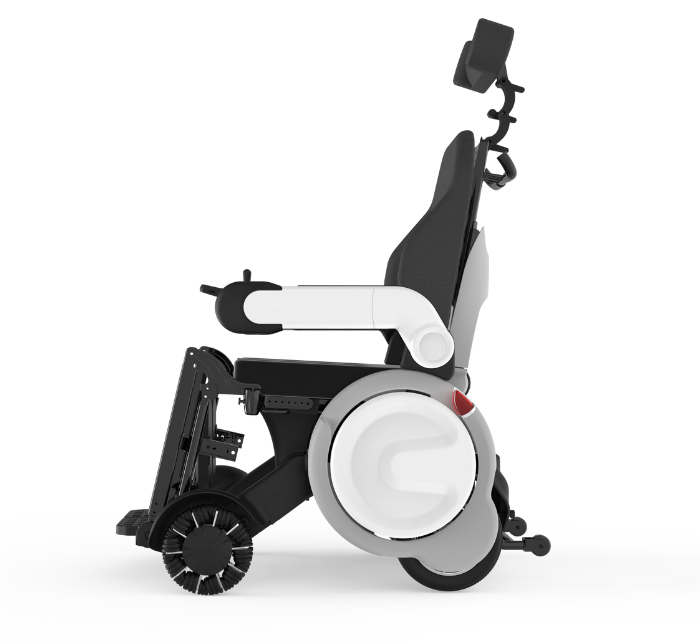
Interested in buying a power wheelchair? Powerchairs vary in design, performance and portability, and understanding the trade-offs among portability, battery size and frame strength can help you find the right fit for your lifestyle. In this guide, we’ll compare the pros and cons of each option and answer some of the most common questions buyers ask before investing in a powerchair.
Lightweight powerchairs
Pros
Lightweight powerchairs are designed for convenience, making them an excellent choice for people who travel regularly or need a mobility solution that’s easy to transport. Many models fold into a compact size, making them simpler to lift into a car boot, store at home and navigate through shopping centres, airports and other indoor spaces. If portability is your priority, a travel-friendly model like the Flytemax, Flytemax 2 or Bruno lite is worth considering.
Cons
The trade-off is that lightweight powerchairs typically use smaller batteries to reduce overall weight. This may result in a shorter driving range compared to larger models, and they generally perform best on smooth, sealed surfaces rather than rough terrain. They also tend to have lower weight capacities than heavy-duty alternatives.
Heavy-duty powerchairs
Pros
Heavy-duty powerchairs are built for durability, stability and all-day performance. Their stronger frames, enhanced suspension and larger batteries make them well suited to longer outings and more challenging environments, including grass, gravel and uneven paths. They’re also available in higher weight capacities, with options including powerchairs for weights up to 150kg and powerchairs for weights up to 160–250kg.
Cons
However, the added strength does come with a few compromises. Heavy-duty models are typically heavier to transport, may require a vehicle hoist or ramp for loading, have a larger turning circle and require more storage space at home.
Common questions when comparing powerchairs
Is it better to get a powerchair that folds in one piece or one that breaks down into several parts?
That depends on how you’ll transport it. Folding powerchairs are quicker to set up and require less assembly, making them ideal for frequent travel. Models that break down into several pieces can take a little longer to reassemble, but the lighter individual components are often easier to lift into a vehicle.
Can I drive a powerchair on grass, gravel or uneven pavement without getting stuck?
It depends on the chair’s tyres, suspension and drive configuration. Heavy-duty powerchairs generally perform better on uneven outdoor surfaces, while lightweight travel models are better suited to footpaths, shopping centres and other sealed areas.
Are lithium-ion powerchair batteries allowed on commercial aeroplanes?
In many cases, yes. However, airline approval is usually required, and battery size is an important consideration. Before travelling, always check your airline’s specific requirements regarding lithium-ion batteries and power mobility devices.
How many kilometres can a travel powerchair go on a single charge compared to a standard model?
Travel powerchairs prioritise portability over maximum driving range so they generally use smaller batteries than standard or heavy-duty models, although on most of our travel powerchairs we have options to include a 2nd battery for longer distance travelling. Larger powerchairs can often accommodate higher-capacity batteries for longer distances, although actual range varies depending on factors such as battery size, user weight, terrain, speed and weather conditions.
Is an electric rollator a better option?
Not everyone needs a full-time power wheelchair. If you can still walk independently but would benefit from extra assistance over longer distances, an electric rollator may be a more suitable option. It provides powered support while allowing you to remain active, making it ideal for people who need a helping hand rather than a seated mobility solution.
Choosing the right powerchair for your lifestyle
The right powerchair depends on how and where you plan to use it. Consider whether you’ll primarily be indoors or outdoors, how often you’ll need to transport it, the storage space you have available, your required weight capacity and whether you plan to travel regularly.
Explore Top Gun Mobility’s full range of power wheelchairs, visit our dealers for expert advice.