
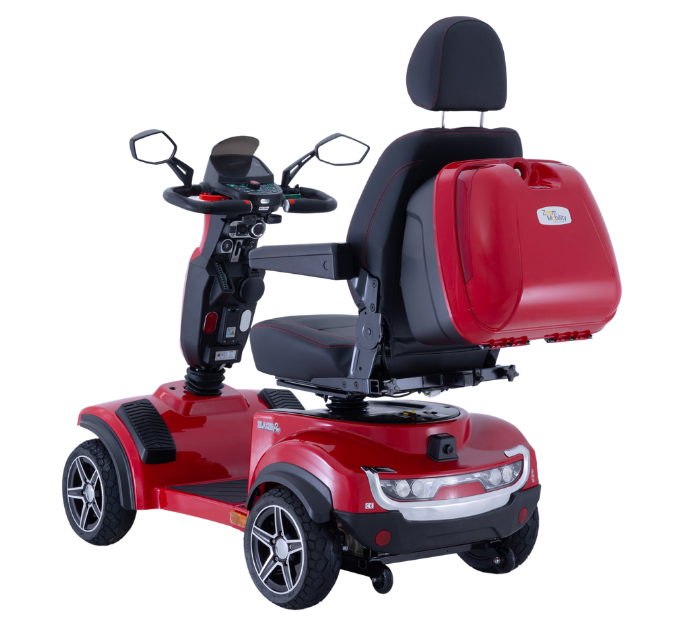
Regaining your independence and getting back out into the community is an exciting step forward. Owning and operating a scooter is designed to offer true freedom so you can enjoy daily errands, social visits and outdoor outings with absolute confidence.
If you or a loved one are wondering exactly what are the rules for mobility scooters, the great news is that they are remarkably simple. These clear guidelines exist to support your independence, empower your daily travel and keep everyone safe. Here is a quick breakdown of the essential mobility scooter legal rules you need to know for a smooth and enjoyable experience.
Your legal status as a pedestrian
Under Australian pedestrian traffic laws, a motorised device is legally classified as a Personal Mobility Aids (PMA) item. Because you are treated as a pedestrian rather than a vehicle driver, owning and riding your device is simple and accessible.
Key legal points to know:
- Licensing requirements: If you are wondering, do you need a licence for a mobility scooter? The answer is no. You do not need a driver’s licence, permit or formal driving test.
- Vehicle registration: Traditional registration is not required in most states. Queensland is the only exception, where free registration is required for use of public paths.
- Where you can ride: You have the legal right to travel on footpaths, through shopping centres and across designated pedestrian crossings.
For a state-by-state summary, read our guide on mobility scooter laws in Australia.
Footpath safety rules and speed limits
To protect yourself and those around you, standard regulations set clear expectations for everyday trips. Focusing on practical footpath safety ensures a smooth journey for everyone sharing the pavement.
Key footpath rules:
- Mobility scooter speed limit: Speed is legally capped at 10 km/h on public footpaths and shared walkways. While some heavy-duty models can travel faster on private property, you must maintain this safe speed in public.
- Pedestrian right-of-way: Always give way to pedestrians on pavements and shared paths.
- Responsible riding: Keep a sensible pace around tight corners, watch for driveway traffic and avoid riding while under the influence of alcohol or drugs.
Road rules and air travel regulations
Whether you are taking a quick trip down the street or planning an overseas holiday, knowing exactly where you can safely use your device ensures a smooth, hassle-free journey.
Road use guidelines
Scooters should always stick to footpaths, nature strips and shared paths wherever possible. Under standard mobility scooter road rules, you are legally permitted on the road under specific conditions:
- The footpath is missing, blocked or unsafe to use.
- You are actively crossing the street via the shortest route possible.
- Keep as far to the left side as practical or face oncoming traffic on quiet streets, following standard mobility scooter road rules.
Flying with your scooter
Taking your device on an aeroplane is straightforward when you plan ahead. International airline guidelines state that folding travel scooters must comply with a lithium-ion battery limit (300Wh) for cabin safety. Exploring our collection of reliable mobility scooters makes finding compliant, airline-friendly mobility aids completely effortless. Always confirm with your airline in advance before you travel.
Enjoy safe and independent travel
Understanding these simple guidelines helps ensure every trip is safe, enjoyable and hassle-free. Whether you are choosing your first device or upgrading your current model, we are here to support your travel goals. Explore our top picks for the best mobility scooters of 2026 to find your ideal ride today.
FAQ’s
Do you need a licence for a mobility scooter?
No. You do not need a driver’s licence, permit or driving test to operate a mobility scooter in Australia. You are legally categorised as a pedestrian.
Can a mobility scooter go on the road?
Generally, no. You should only travel on the road when a footpath is unavailable or obstructed. When using the road, stay well to the side, face oncoming traffic, and return to the pavement as soon as possible.
What happens if you go over 10 km/h on a mobility scooter?
Exceeding the 10 km/h speed limit on public footpaths breaches local traffic regulations. Authorities can issue warnings or fines for speeding in pedestrian zones, so maintaining a safe pace is always best.