
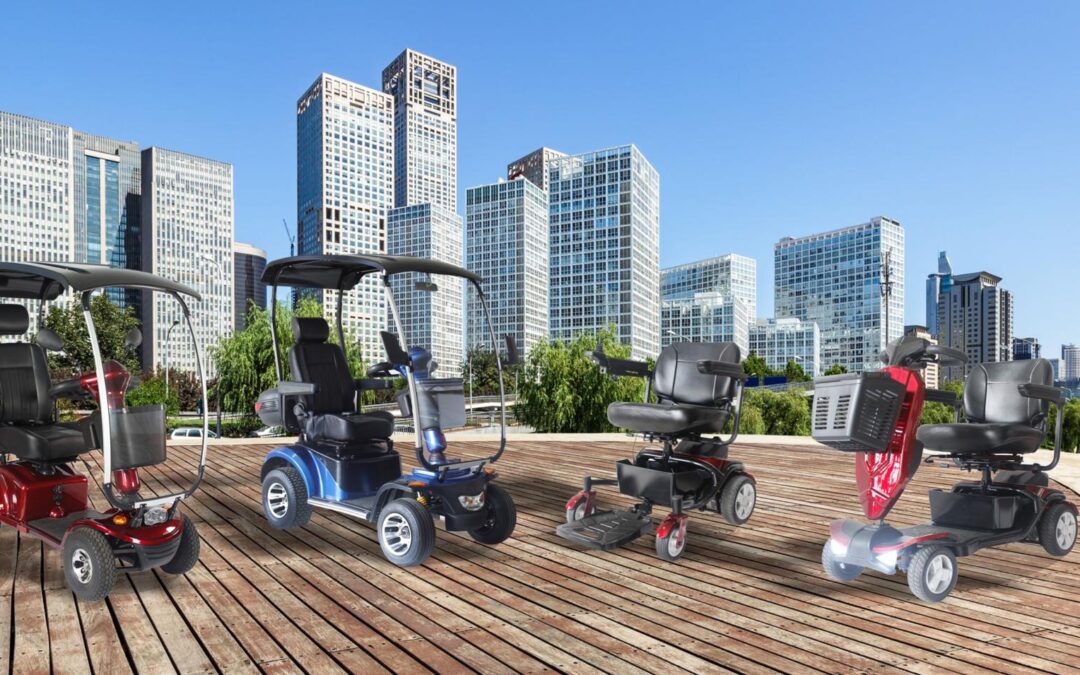
Scooters are growing in popularity as a flexible and convenient way to get around. But with so many options available, it’s no wonder many people get mobility scooters and electric scooters mixed up. While they may look similar at a glance, these two types of scooters are designed for very different users and purposes.
In this article, we’ll walk you through their key differences so you can choose the option that best fits your needs or those of your loved one.
Purpose and usage
The primary difference comes down to whom the scooter is designed for and why. Mobility scooters are built specifically to assist individuals with limited mobility due to disability, age or medical conditions. These scooters help people carry out daily tasks, maintain independence and are often used for errands, getting around shopping centres or enjoying the outdoors.
In contrast, electric scooters are typically used by able-bodied individuals for short-distance transport or leisure. They’ve become popular in urban areas as a convenient alternative to public transport or walking, ideal for zipping through city streets but not suitable for those with physical limitations.
Speed and range
Speed is another key differentiator. Mobility scooters generally travel at speeds of 6 to 10 km/h, making them ideal for footpaths, shopping precincts and residential areas. Battery life varies but most models are built to comfortably handle a full day’s worth of local travel.
Electric scooters, on the other hand, can reach speeds of up to 25 km/h. While they are faster, they require more caution and may not be suitable for people with slower reflexes or balance issues. Their range and battery capacity can be comparable, but use conditions and terrain will significantly affect performance.
Design and comfort
When it comes to comfort, mobility scooters are the clear winner. They feature padded seats with armrests, supportive backrests and ergonomic controls. Some models even include suspension and larger wheels for a smoother ride, making them suitable for extended use throughout the day.
Electric scooters are built with portability in mind. Most are compact, lightweight and require the rider to stand. While great for quick trips, they’re not ideal for people who need seating support or plan to travel long distances.
Safety and regulations
In Australia, mobility scooters are considered medical devices, not vehicles. This means they’re legally allowed on footpaths and pedestrian zones provided they travel under 10 km/h and are used responsibly.
Electric scooters face more complex regulations. They’re subject to state-specific laws, including mandatory helmet use, speed limits and restrictions on where they can be ridden. In some states, privately owned e-scooters aren’t permitted on public roads or footpaths, which can limit their practicality.
Explore Australia’s best mobility scooters
For quick, recreational transport and urban commuting, an electric scooter may do the trick, provided you’re able-bodied and within the legal boundaries of your state. If you’re looking for a scooter that functions as a medical device to support accessibility and long-term independence, a mobility scooter is the more practical and supportive choice.
At Top Gun Mobility, we offer some of the best mobility scooters in Australia, designed to help Australians move with freedom and confidence, wherever life takes you.